If you are familiar with pneumatic mechanical equipment, you should be aware that compressed air is often referred to as “the fourth largest utility” in the industrial field. However, untreated raw compressed air usually contains impurities, water, and the pressure is often unstable. This is precisely why Air Preparation Units are the key to ensuring the stable operation of the equipment in the production workshop. If not handled properly, expensive tools and valves are at risk of premature failure.
In this guide, we’ll explore why air preparation units are an essential part of any high-efficiency pneumatic system, dissect the core structure of the FRL unit in detail, and explain how the FRL unit can be combined with a Digital Air Pressure Switch to optimize system performance.
What Are Air Preparation Units?
Air preparation units, also known as air treatment units, are a set of component systems installed between air compressors and pneumatic tools or equipment. Its main function is to adjust the compressed air to ensure that the air is clean, dry and stable in the downstream equipment required pressure range.
When the compressed air leaves the compressor, the temperature is usually higher, and contains water, oil and solid particles. If these pollutants are not filtered and treated, they will enter the cylinder or valve, which will cause rust, blockage and aging of seals. The core role of the gas source processing element is to remove these impurities and ensure the quality of the compressed air entering the actuator, thereby maintaining the stable operation of the system.
Benefits of Air Preparation Units:
- Protection: Prevents damage to expensive pneumatic components.
- Efficiency: Ensure tools operate under optimum pressure and reduce energy waste.
- Safety: Prevent dangerous bursts caused by excessive pressure.
- Longevity: Greatly extend the service life of the entire pneumatic system.
What Are the Core Components of the FRL Units?
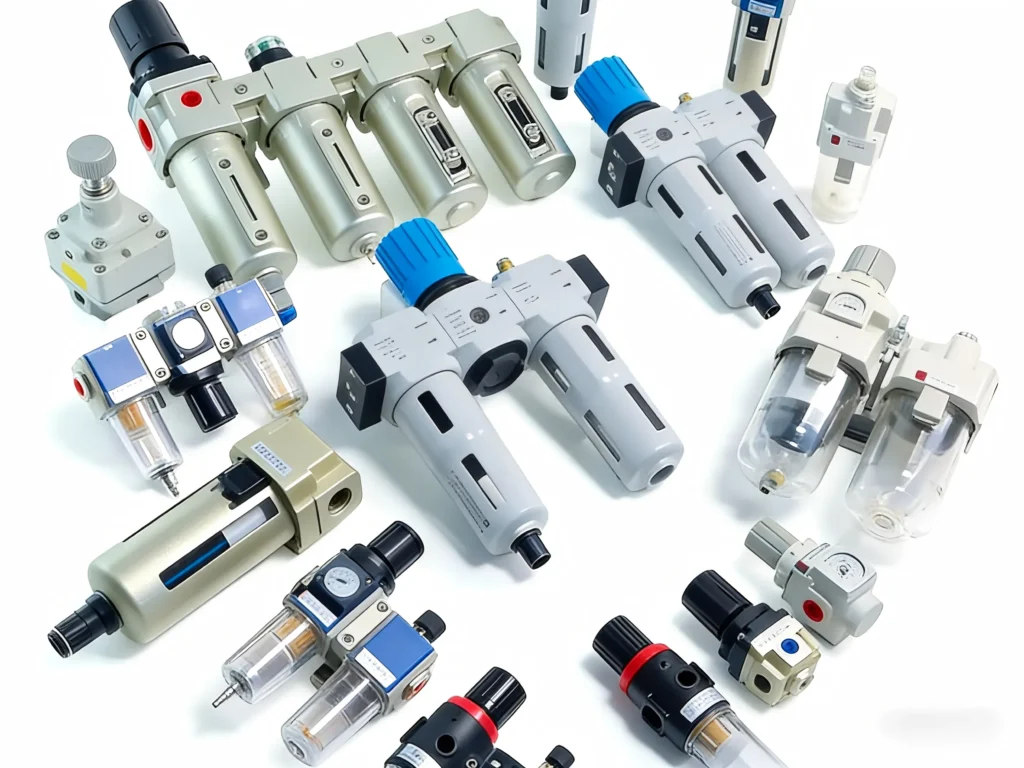
The most common configuration of the air preparation units is the FRL combination. FRL represents Filter, Regulator and Lubricator. These three components work together to handle air.
1. Pneumatic Air Filter
Pneumatic air filters are used to remove solid contaminants (such as dust, rust, pipe oxide) and liquid water from compressed air.
How does it work? The air enters the filter cup and forms a whirlwind rotation. Under the action of centrifugal force, the heavier water droplets and particles are thrown to the cup wall and slide down to the bottom outlet. The air is then passed through a sintered filter element (usually with a filtration accuracy of 5 to 40 microns) to trap more fine dust.
Types of Filter:
- General Purpose: Remove water and large particles.
- Coalescing Filters: Removal of oil aerosols and fine oil mists (critical for painting or food processing applications).
2. Air Regulators
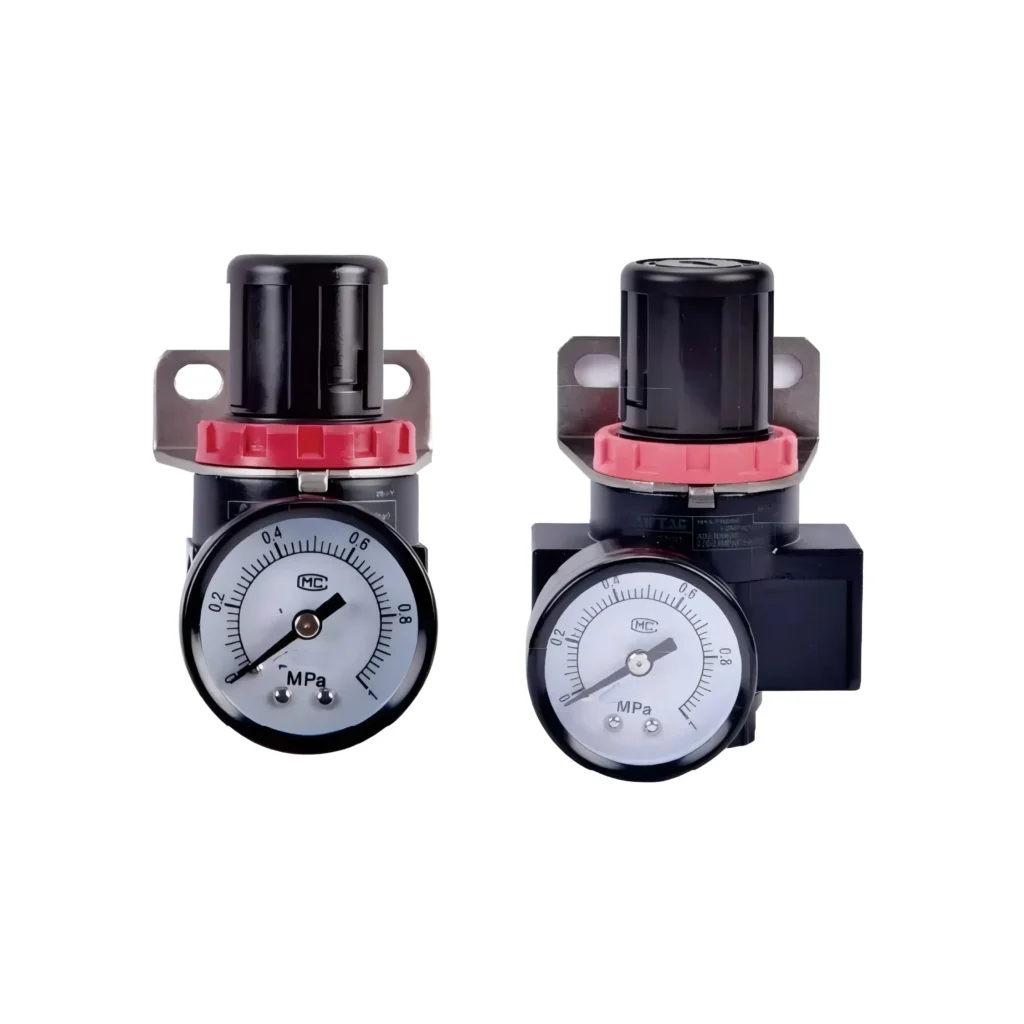
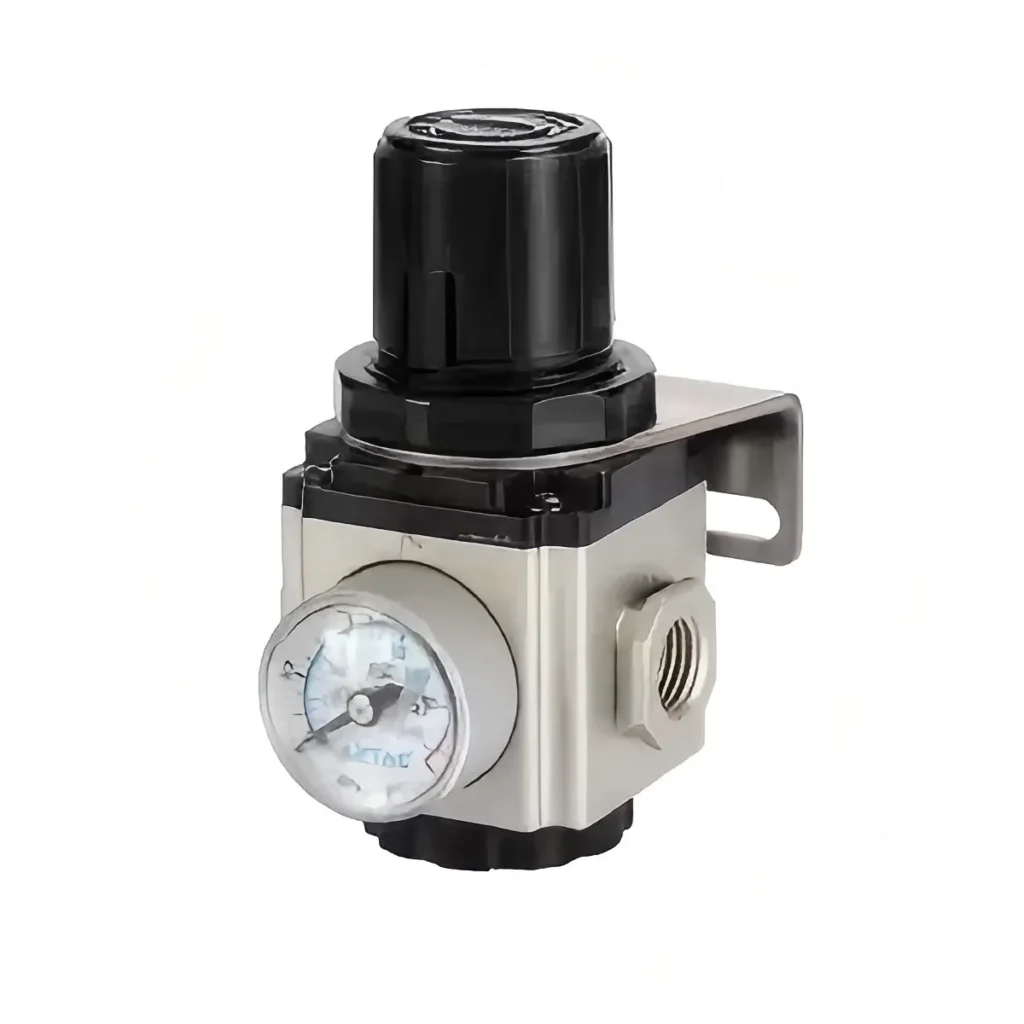
An air pressure regulator is used to reduce the supply pressure to the working pressure required for pneumatic tools or equipment. Compressors usually provide higher output pressure, while downstream equipment often needs to operate at lower and stable pressure.
For example, when the output pressure of the compressor is 120 PSI and the tool demand is only 90 PSI, if not adjusted, the long-term operation of the equipment beyond the rated pressure will aggravate wear and cause energy waste. The spring-loaded diaphragm structure is used inside the pressure regulating valve, and the flow area is automatically adjusted by sensing the change of outlet pressure, so as to maintain a stable outlet pressure when the inlet pressure fluctuates.
3. Air Lubricators
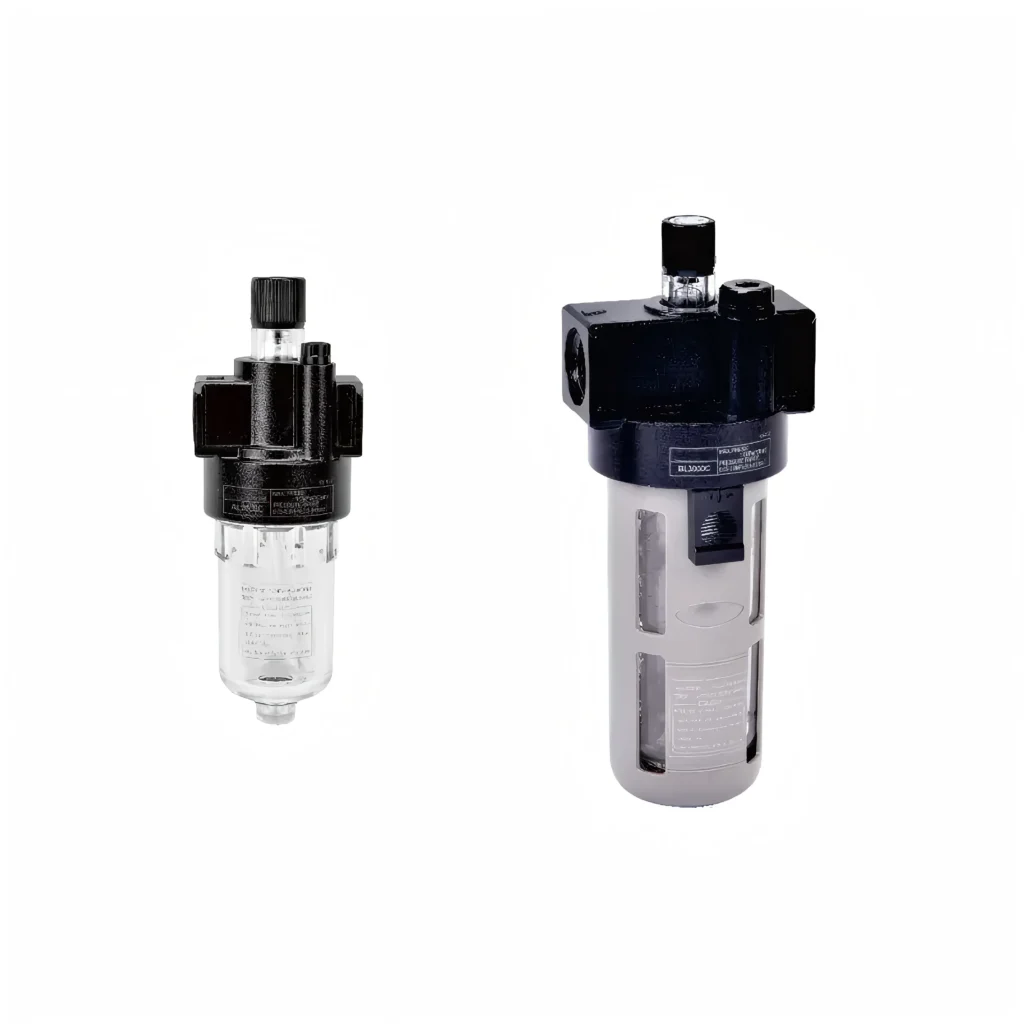
The air lubricator is usually installed at the last stage of the FRL units to add fine oil mist to the compressed air to lubricate the moving parts inside the pneumatic tool, such as blades, cylinder pistons and pneumatic motor rotors.
It should be noted that many new pneumatic components are currently designed with “lifelong lubrication” and do not require additional oil supply. Before adding the oil mist device to the system, the technical specifications of the equipment manufacturer should be consulted first; if the components without lubrication are forced to supply oil, it may destroy the preset grease inside and affect the normal operation.
Advanced Monitoring with FRL: The Air Pressure Switch Digital
With the development of industry, standard mechanical instruments are being replaced by more intelligent technologies. The air pressure switch digital unit provides accurate monitoring and feedback.
Unlike traditional analog instruments, digital pressure switches can send electrical signals to PLC (Programmable Logic Controller). This makes the following functions possible:
Real-Time Monitoring: immediately detect pressure drop.
- Automatic Cut-off: If the pressure is below the critical threshold, the system can be paused to prevent defective production.
- Visual Clarity: Digital displays are easier to read in dimly lit factories.
Integrating digital switches into your air preparation units can transform a passive system into an active and intelligent monitoring station.
Modular vs. Standard Air Preparation Units
When selecting an air preparation unit, you usually need to choose between modular and standard designs. Here’s a breakdown to help you make a choose:
| Comparison of Different Air Preparation Units | ||
|---|---|---|
| Feature | Modular Units | Standard (Threaded) Units |
| Assembly | Components clip together easily. | Components are piped together with nipples. |
| Maintenance | fast; remove a single unit without disturbing piping. | Slow; requires unthreading pipes to remove a unit. |
| Flexibility | High; easy to add a soft-start valve or switch. | Low; difficult to modify once installed. |
| Cost | Slightly higher initial cost. | Lower initial cost. |
For most modern industrial applications, modular air preparation units are preferred due to ease of maintenance.
How to Install Air Preparation Units Correctly?
In order to take full advantage of your FRL units, placement and installation are vital.
Distance: Install the device as close as possible to its protective device (ideally within 15 feet/about 4.5 meters).
Order: The order must be: Filter → Regulator → Lubricator. If you put the lubricator before the regulator, the oil mist may settle out.
Flow Direction: Observe the flow direction arrows marked on the air regulators and filters. Reverse installation will limit flow and hinder drainage.
Drainage: Ensure that the filter cup is easy to contact. If you use a manual drain, it must be checked daily. For hard-to-reach areas, it is recommended to use an automatic drain.
Air Preparation Units: Improve System Reliability
The reliability of the pneumatic system depends on the quality of compressed air. By configuring filters, air pressure regulator and air lubricator, clean and stable compressed air can be provided for downstream equipment, thereby prolonging the service life of pneumatic components, reducing downtime and reducing maintenance costs.
ANRUK suggested that regular inspection and maintenance should be carried out, filters should be replaced in time and condensed water should be emptied.
Common Troubleshooting about Air Preparation Units
Even the best air preparation units need attention. Here are common questions that users often ask when they encounter problems.
Why does my air pressure regulating valve leak?
If you hear a hissing air leakage at the overflow port of the air pressure regulator, it usually means that there is debris or diaphragm damage on the valve seat. This happens frequently if the upstream pneumatic air filter is not maintained.
Despite the filter, why is there water in my windpipe?
First, check whether the filter cup is full, if the drain is blocked, it will affect the normal drainage. Secondly, the high air velocity is also a factor. When the air velocity is too fast, the water droplets are easily re-engulfed in the air flow before settling to the bottom of the cup. In addition, the temperature change will also lead to water analysis. If the air continues to cool after passing through the filter, new condensed water will be formed. In this case, it may be necessary to install an air dryer upstream to reduce the dew point of compressed air more thoroughly.
Do I really need an air lubricator?
As mentioned above, it is not always necessary. Please check your tool manual. If you start to use the air lubricator, you must insist on using it, because the oil will wash away the original grease filler in the valve.
How often should I replace the filter?
It is recommended to make a plan based on the frequency of use and the degree of environmental dust, usually once every 3-6 months. If the environment is very dirty, it is recommended to check monthly. Do not wait until the equipment is reported wrong to replace, because the blocked filter will increase the compressor load, resulting in increased energy consumption.
Filter, air pressure regulator, air lubricator, these three must be used at the same time?
Not necessarily. FR combination-only filter + air pressure regulator is suitable for most oil-free lubricated pneumatic components. The FRL combination is suitable for mechanical structures with specific requirements for lubrication. There are also some specific applications – if the device has extremely high requirements for air purity, an additional precision filter/degreaser is usually added after the FRL.